Compassion in Practice: Small Assisted Living Homes and Hands-On Care
Business Name: BeeHive Homes of Portales
Address: 1420 S Main Ave, Portales, NM 88130
Phone: (505) 591-7025
BeeHive Homes of Portales
Beehive Homes of Portales assisted living is ideal for those who value their independence but require help with some of the activities of daily living. Residents enjoy 24-hour support, private bedrooms with baths, medication monitoring, home-cooked meals, housekeeping and laundry services, social activities and outings, and daily physical and mental exercise opportunities. Beehive Homes memory care services accommodates the growing number of seniors affected by memory loss and dementia. Beehive Homes offers respite (short-term) care for your loved one should the need arise. Whether help is needed after a surgery or illness, for vacation coverage, or just a break from the routine, respite care provides you peace of mind for any length of stay.
1420 S Main Ave, Portales, NM 88130
Business Hours
Walk into a good small assisted living home on an ordinary weekday and you will usually discover 3 things before anybody states a word. The sound level is low however not silent. Somebody is cooking or reheating something that smells like genuine food, not a tray line. And a minimum of one team member is not behind a desk, but at a shoulder, an elbow, or a kitchen area table, talking with an older adult as if they have actually known each other for years.
That texture of life is what families indicate when they say they desire "hands-on" senior care. They are not requesting for luxury. They are requesting for attention, continuity, and enough human presence to trust that a parent will not be left alone when it matters.
Small assisted living homes, typically referred to as residential care homes, board-and-care homes, or group homes, can be a strong response to that demand when they are done well. They are not the right suitable for everyone, and they are not automatically more caring than larger buildings, but their scale gives them tools that huge residential or commercial properties battle to use.
This post looks inside those smaller environments and analyzes how compassion in fact shows up in day-to-day elderly care, how respite care suits, and what compromises households need to comprehend before picking a home.
What "small" assisted living really means
The term "small assisted living" covers numerous models. In practice, it normally implies homes with 4 to 16 homeowners residing in what looks and feels more like a house than a hotel.
Regulations differ by state or province. Some jurisdictions accredit these homes independently from big assisted living communities, with various staffing rules or service limits. Others treat them under the exact same umbrella, although the lived experience is different.
The physical environment tends to share certain characteristics:
Residents often have private or semi-private bedrooms instead of apartment-style suites. Commons locations resemble a living room and family-style dining area. The cooking area is more central, and meals are ready closer to serving time, in some cases by the very same staff who help with bathing and medication.
The small scale is not immediately a benefit. A cramped, poorly lit home is still a cramped, inadequately lit home. The advantage comes when the modest size supports closer relationships, shorter reaction times, and a more versatile rhythm of care.
In my experience, the greatest small homes are very clear about what they can and can not do. A six-bed home with 2 staff on days and one awake over night can handle numerous assisted living needs: help with dressing, showers, incontinence care, medication management, cueing for memory loss, and light movement support. That very same home might not be safe for a person who has actually repeated aggressive outbursts or who needs two people and a mechanical lift for every single transfer.
The most caring operators state no when they can not meet a need, even if that means losing a full room.
Why size alters the feel of care
Compassion in elderly care is not a slogan. It is a set of habits that can be picked up, timed, and even quantified.
One way to understand the difference in between small assisted living homes and bigger buildings is to consider the number of individuals a staff member should keep in mind at the same time. In a 60-resident neighborhood, an assistant on an early morning shift may have 10 to 14 people on their project. In a small home with 8 residents and 2 aides, that caseload drops to 4.
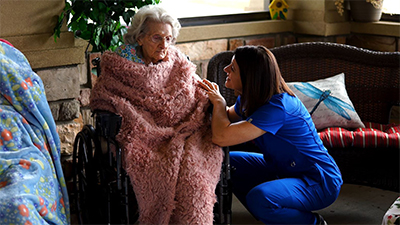
On paper, that looks like time. In reality, it appears like:
A team member noticing that Mrs. S is slower to stand this week and calling the nurse to look for a urinary tract infection. Someone remembering that Mr. K's child stated he had a fall at home last year, and seeing more closely on the stairs. A caregiver who knows that if they give Ms. R a few additional minutes after waking, she will be far less agitated during her shower.
Those are examples of "relational knowledge," the small individual details that build up when the very same people care for one another day after day. The smaller the home, the less typically projects modification and the easier it is for personnel to hold that knowledge in their heads, not just in a chart.
Families feel this when they call. In lots of small homes, the individual who addresses the phone has actually seen their parent within the last thirty minutes. They can state, "He consumed more breakfast than usual today" or "She went outside with us this afternoon." That immediacy offers households a sense of psychological safety, specifically when they can not visit as often as they would like.
Of course, small size does not fix understaffing, burnout, or poor training. A six-bed home with one sidetracked caretaker who invests the evening in the back workplace can feel more neglectful than a hectic 80-unit structure with noticeable activity and oversight. Scale produces possibilities, not guarantees.
A day in a high-touch small home
The clearest way to comprehend hands-on care is to walk through a typical day.
Morning typically begins earlier than families expect. Many older grownups wake between 5 and 7 a.m., particularly those with discomfort, dementia, or long-standing regimens from working life. In a strong small assisted living home, staff stagger wake-ups based upon individual preference. Someone who constantly enjoyed to sleep in might be the last to rise and eat breakfast at 10. Someone else, a former farmer, might remain in a chair with coffee by 6:30.
Hands-on care shows in pacing. Rather of hurrying eight people through showers before a set breakfast window, staff may spread bathing over the early morning and early afternoon, pairing everyone's energy level with a calmer time on the schedule. A helper might sit on the bed, talk through the day, offer extra time for stiff joints, and adjust clothing choices to weather and mood.
Meals are typically where small homes shine. Since there are fewer individuals, the kitchen area can adapt rapidly. If a resident shows less appetite at breakfast, staff might offer a late-morning snack, include a favorite yogurt, or heat up leftover pancakes when the state of mind strikes. That versatility can make a real distinction in preserving weight and preventing dehydration, particularly for people with memory loss who need regular prompts.
Medication rounds feel different in a small home as well. The employee passing medications typically knows who needs their tablets embeded applesauce, who chooses to see each tablet plainly, and who is likely to hide a tablet under their tongue. That knowledge lowers refusals and errors.
Afternoons tend to be quieter. Some residents nap. Others see tv, check out, or sit outside. This is where a small environment either shows its strength or its weak point. With so couple of people, monotony can creep in if personnel rely just on group activities. Residences that do this well construct small minutes of engagement: folding laundry together, chopping vegetables for supper, looking at old picture albums individually, or watering plants.
Evenings are frequently the hardest part of the day in dementia care. Confusion and agitation can surge, a pattern known as "sundowning." In a small home with a predictable, calm regimen, personnel can dim the lights, put on familiar music, and move homeowners into cozier areas rather of big, echoing spaces. That atmosphere is not a cure, but it frequently lowers the volume of distress.
Throughout all of this, hands-on care means touching with intention, not simply performance. A caregiver may hold a hand during a high blood pressure check, inform someone quickly what they are doing at each step of incontinence care, or sit for an extra minute after helping someone onto the toilet so the person does not feel rushed. Those small stops briefly communicate dignity more than any framed objective statement.
Where respite care fits into small homes
Respite care, short-term stays that provide household caregivers a break, can be especially powerful in small assisted living settings. When provided attentively, respite introduces an older grownup and their household to a home before a permanent move is needed.
Families often get to respite tired. A daughter may have been supplying day-and-night senior look after a parent with advancing dementia. A partner might require surgical treatment and can not safely raise or supervise their partner during their own healing. In these situations, a small home can provide something more personal than a guest room in a large community.
The advantages are practical. Brief stays of one to four weeks in a home with six or eight locals permit staff to discover a person's practices rapidly. If the individual later on returns for long-term elderly care, those notes about favorite foods, sleep patterns, or sets off for agitation are currently in place. The older adult, in turn, is not walking into a completely unknown environment.
However, not every small home offers respite. With so few rooms, keeping a bed open for brief stays can be economically dangerous. Some homes maintain a "swing room" that alternates in between respite and hospice use, while others accept respite only when they have a natural job. Families trying to find this option should start early and anticipate that specific dates might be less flexible than in big buildings with multiple empty units.
From a compassion perspective, the key question is whether respite locals are dealt with as full members of the home, or as temporary visitors. In my view, the greatest homes present respite visitors to everybody, include them at meals and activities, and invest the exact same energy in their grooming, routines, and choices as they do for permanent locals. Anything less feels transactional.
Staffing: the genuine engine of hands-on care
Every brochure for senior care will speak about empathy. The truth shows up on the staffing schedule.
In a strong small assisted living home, daytime staffing often looks like one caregiver for every 3 to 5 citizens, often supplemented by a nurse visit or an on-call nurse through a firm. Overnight staffing might drop to one awake individual for the entire home, periodically supported by a live-in employee sleeping nearby.
Those ratios, when filled by trained, stable staff, make true hands-on care feasible. A caregiver can take 20 minutes for a shower instead of 8. They can hang out trying different approaches when someone declines care, instead of simply recording "resident declined."
Training is where small homes sometimes battle. Large communities typically have corporate education departments, standardized modules, and clear profession paths. A stand-alone care home might depend upon the owner's understanding and whatever external classes they can afford. The very best owners compensate by investing heavily in on-the-job mentoring. They work shoulder to carry with new staff for weeks, modelling how to talk with residents, manage dementia behaviors, and notification subtle health changes.
Burnout is the peaceful enemy of hands-on care. In a small home, if one crucial caregiver quits or ends up being ill, the emotional and practical effect is massive. Citizens feel the lack instantly. Remaining personnel needs to absorb extra work. To manage this, responsible operators restrict compulsory overtime, employ relief personnel even when margins are thin, and construct relationships with hospice and home health agencies so some jobs can be shared.
Families in some cases presume that a small home will seem like an extension of their own family. That can be true, however it is unreasonable to anticipate staff to replace all the love, perseverance, and memory that relatives bring. Healthy plans acknowledge that personnel are specialists. Compassion is part of their work, and they should have pay, time off, and regard that shows the emotional load of that work.
Trade-offs: what small homes can not easily provide
It is appealing to paint small assisted living homes as the ideal answer to every challenge in elderly care. Truth is more nuanced.
First, medical intricacy matters. A frail older adult with regulated persistent health problems can do extremely well in a small setting. Someone who needs frequent IV treatments, daily respiratory treatment, or rapid-response medical interventions may be more secure in a community with on-site nursing 24 hours a day or in a nursing facility.
Second, specialized dementia assistance differs. Some small homes stand out at assisted living near me BeeHive Homes of Portales dementia care, utilizing calm routines, individualized interaction, and protected yards or outdoor patios. Others have neither the personnel numbers nor the training to manage serious roaming, sexually disinhibited behaviors, or duplicated physical aggression. Households ought to ask directly how the home manages these situations and how frequently they have actually had to release somebody for behavior.
Third, social range is restricted. Some older grownups grow in a small, stable group and find big activities overwhelming. Others delight in more stimulation, clubs, outings, and the possibility to fulfill brand-new people routinely. A home with 6 residents can not provide the very same calendar as a 100-unit community with a full-time activities director. The secret is match. A shy former teacher who enjoys quiet individually discussions may flourish where a more extroverted individual feels cooped up.
Finally, small homes are vulnerable to ownership quality. Without any corporate parent to enforce standards, the owner's principles, monetary discipline, and individual strength are front and center. I have actually seen amazing owner-operators who address the phone at midnight, can be found in on vacations, and know each resident's grandchild by name. I have also seen poorly run homes where costs go overdue, personnel turnover is consistent, and homeowners experience avoidable neglect. Visiting face to face and trusting what you observe remains essential.
Small vs large: the useful differences families notice
For families comparing small assisted living homes with bigger centers, it helps to look beyond marketing language and focus on actual daily experiences.
Here are some distinctions that often emerge:
-
Response time to needs
In a small home, the distance between a bed room and the nearby caregiver is generally short, and personnel can hear someone calling out from many parts of the house. In a large building, reaction depends greatly on call systems, project size, and staffing on that specific shift.
-
Consistency of relationships
Homeowners in small homes tend to see the exact same 2 to five caretakers most days. That stability can be soothing, particularly for people with dementia who depend upon familiar faces. Larger buildings in some cases turn staff more regularly amongst floorings or wings. -
Flexibility of routines
It is easier for a small home to change shower days, meal times, or bedtime to private preferences, because there are less individuals to collaborate. Big neighborhoods, by requirement, rely more on repaired schedules to keep operations manageable. -
Visibility of leadership
In lots of small homes, the owner or administrator is on-site often, not just throughout company hours. Families can frequently talk with a decision-maker straight. In big homes, leadership might oversee numerous departments and be less offered day-to-day. -
Access to amenities
Large communities normally have more formal amenities: fitness centers, theaters, beauty parlor, chapels. Small homes trade that scale for a more intimate setting. Some households value the features extremely; others care more about the texture of everyday interactions.
No single design wins on every point. The right choice depends upon the older grownup's character, health status, financial resources, and the family's expectations.
How to assess hands-on care when you visit
Touring a small assisted living home is less about the paint color and more about the energy between people. A home can be modest and still offer excellent care; it can also be beautifully provided and mentally cold.
During a visit, watch how staff and locals communicate when they are not "on show." Listen for how names are utilized. Do personnel present citizens to you, or talk over them? Does anybody laugh together, or does the environment feel tense?
It can help to bring a list of focused concerns so you do not forget key topics in the moment.
Here are practical questions households frequently find useful:
- "Who will actually be caring for my parent day to day, and what training do they have?"
- "The number of citizens are here, and how many staff are on responsibility during days, nights, and nights?"
- "Tell me about a current situation where a resident's condition changed quickly. What took place and how did you handle it?"
- "What kinds of behaviors or care requirements would make you say this home is no longer a safe fit?"
- "Do you offer respite care, and have any short-stay visitors later on moved in completely?"
The specifics of their responses matter less than whether the reactions are clear, candid, and consistent with what you see around you. Unclear promises without examples need to be a caution sign.

If possible, visit at various times of day. Late afternoon and early night are particularly informing, since staffing dips and tiredness increase. That is when hurried or thin care programs itself.
Working with the home as a real partner
Even the most mindful small home can not change the special role of household. The best outcomes take place when relatives, citizens, and personnel see themselves as a care team instead of as different sides of a contract.
From the household side, this suggests sharing comprehensive history. What relaxes your mother when she is frightened? Which music did your father love? How did your aunt take her coffee for the last 40 years? These may seem like small information, but in a small home, they are precisely the tools personnel use to convenience, reroute, and connect.
It also indicates setting sensible expectations. Personnel can not call each child every day, however they can send out a fast text one or two times a week, or upgrade a shared notebook in the resident's room. Families who visit and engage respectfully with personnel, ask how shifts are going, and say thank you for particular acts of compassion tend to develop stronger partnerships.
From the home's side, empathy in practice suggests transparent communication, especially when things go wrong. Falls will still take place. A cherished caregiver may stop or move away. Health problem can sweep through even the cleanest home. What identifies a credible operator is how rapidly they inform families, how they discuss choices, and how they welcome families into care-plan changes.
When small is the best kind of big
Assisted living, in any kind, has to do with assisting older adults keep as much autonomy and comfort as possible while remaining safe. Small homes approach that objective through intimacy rather than scale.
For some individuals, that intimacy feels like a village. A retired mechanic who never liked crowds might discover it simpler to browse a single-story house than a multi-wing school. A person with sophisticated dementia might feel less overwhelmed by a handful of faces and a brief corridor. A partner supplying day-to-day care at home may lastly sleep through the night during a respite stay, knowing their partner is only a few actions away from a caregiver.
For others, the same intimacy can feel restricting. A former executive used to a wide social circle may choose the bustle of a bigger neighborhood, even if that implies a more structured regimen. Someone who enjoys organized trips, classes, and events may find a small home too quiet.
The main concern is not "Which type is much better?" but "Which setting provides this specific person the very best opportunity at a dignified, appealing, and safe life right now?"
Compassion in practice is not a soft idea. It is the hand at an elbow on a slippery restroom floor, the client repetition of an answer to the exact same question 10 times in an hour, the willingness to learn that Mr. L eats much better if his peas do not touch his potatoes. Small assisted living homes, at their finest, are constructed to make that level of attention feel ordinary.
For families navigating senior care choices, it deserves stepping past the shiny pictures and asking to see what occurs in the in-between minutes. That is where you will find the sort of hands-on care that lets both locals and relatives breathe a little easier.
BeeHive Homes of Portales provides assisted living care
BeeHive Homes of Portales provides memory care services
BeeHive Homes of Portales provides respite care services
BeeHive Homes of Portales supports assistance with bathing and grooming
BeeHive Homes of Portales offers private bedrooms with private bathrooms
BeeHive Homes of Portales provides medication monitoring and documentation
BeeHive Homes of Portales serves dietitian-approved meals
BeeHive Homes of Portales provides housekeeping services
BeeHive Homes of Portales provides laundry services
BeeHive Homes of Portales offers community dining and social engagement activities
BeeHive Homes of Portales features life enrichment activities
BeeHive Homes of Portales supports personal care assistance during meals and daily routines
BeeHive Homes of Portales promotes frequent physical and mental exercise opportunities
BeeHive Homes of Portales provides a home-like residential environment
BeeHive Homes of Portales creates customized care plans as residents’ needs change
BeeHive Homes of Portales assesses individual resident care needs
BeeHive Homes of Portales accepts private pay and long-term care insurance
BeeHive Homes of Portales assists qualified veterans with Aid and Attendance benefits
BeeHive Homes of Portales encourages meaningful resident-to-staff relationships
BeeHive Homes of Portales delivers compassionate, attentive senior care focused on dignity and comfort
BeeHive Homes of Portales has a phone number of (505) 591-7025
BeeHive Homes of Portales has an address of 1420 S Main Ave, Portales, NM 88130
BeeHive Homes of Portales has a website https://beehivehomes.com/locations/portales/
BeeHive Homes of Portales has Google Maps listing https://maps.app.goo.gl/1xZDfURp3wt4uv3T6
BeeHive Homes of Portales has TikTok page https://tiktok.com/@beehive.home.of.portales
BeeHive Homes of Portales has an YouTube page https://www.youtube.com/@WelcomeHomeBeeHiveHomes
BeeHive Homes of Portales has Facebook page https://www.facebook.com/BeeHiveHomesOfPortales
BeeHive Homes of Portales has Instagram page https://www.instagram.com/beehivehomesofportales/
BeeHive Homes of Portales won Top Assisted Living Homes 2025
BeeHive Homes of Portales earned Best Customer Service Award 2024
BeeHive Homes of Portales placed 1st for New Mexico Senior Living Communities 2025
People Also Ask about BeeHive Homes of Portales
What is BeeHive Homes of Portales Living monthly room rate?
The rate depends on the level of care that is needed. We do a pre-admission evaluation for each resident to determine the level of care needed. The monthly rate is based on this evaluation. There are no hidden costs or fees
Can residents stay in BeeHive Homes of Portales until the end of their life?
Usually yes. There are exceptions, such as when there are safety issues with the resident, or they need 24 hour skilled nursing services
Do we have a nurse on staff?
No, but each BeeHive Home has a consulting Nurse available 24 – 7. if nursing services are needed, a doctor can order home health to come into the home
What are BeeHive Homes of Portales's visiting hours?
Visiting hours are adjusted to accommodate the families and the resident’s needs… just not too early or too late
Do we have couple’s rooms available?
Yes, each home has rooms designed to accommodate couples. Please ask about the availability of these rooms
Where is BeeHive Homes of Portales located?
BeeHive Homes of Portales is conveniently located at 1420 S Main Ave, Portales, NM 88130. You can easily find directions on Google Maps or call at (505) 591-7025 Monday through Sunday 9:00am to 5:00pm
How can I contact BeeHive Homes of Portales?
You can contact BeeHive Homes of Portales by phone at: (505) 591-7025, visit their website at https://beehivehomes.com/locations/portales/ or connect on social media via TikTok Facebook or YouTube
You might take a short drive to the Blackwater Draw Museum. The Blackwater Draw Museum offers fascinating archaeological exhibits that create enriching outings for assisted living, memory care, senior care, elderly care, and respite care residents.